Blood Flow Restriction Training on Elderly - BFR Training
Front Page
How To Use Blood Flow Restriction Training
Those with a history of sickle cell disease ought to be medically evaluated before thinking about BFR training, and it is most likely that the threats will outweigh the benefits and preclude BFR training for these individuals. Rhabdomyolysis, Case reports of rhabdomyolysis after BFR training have been recorded. It is proposed that rhabdomyolysis may be more common with BFR training due to the amplified metabolic tension involved, nevertheless with the limited information readily available there is no clear proof that the occurrence is higher than with other danger of training.
Nerve injury, Short-term pins and needles and neuropathy have actually been reported following BFR training, but with no clear proof of any long-term damage. Nerve palsies have been reported with surgical tourniquet, however most of cases are short-term, and severity appears to associate with longer tourniquet times (primarily over 3 hours) which need to not apply to BFR training.
Symptoms or indications to suggest nerve involvement ought to be kept track of for, with medical review if they continue. Other factors to consider, Subcutaneous haemorrhage is not unusual with BFR training however is self-limiting. Those with a bleeding condition such as haemophilia should have a medical review before beginning BFR training, as this group might likewise be at threat of other bleeding problems.
This risk can generally be managed, however participants ought to be notified of these potential problems even if more small.
BFR and muscle damage: The research surrounding BFR training and muscle damage is extremely varied. It appears that BFR training has the capacity to trigger substantial muscle damage, and in severe conditions, rhabdomyolysis (Wernbohm et al 2020). The extent of muscle damage seems reliant on the training procedure used, particularly the level and duration of the occlusion stimulus.
What Is Blood Flow Restriction Training
As with all kinds of training, there is an inherent danger associated and BFR is not immune to this, nevertheless adding BFR to work out does not appear to include to the danger. blood flow restriction therapy. References: Nakijima, T., et al., Use and security of KAATSU training: Outcomes of a nationwide survey. International Journal of KAATSU training research, 2006.
You might have seen people at the health club using bands around their arms or legs while exercising and questioned what they were doing. Well, it is a technique called blood circulation limitation training, and it's ending up being far more popular recently (blood flow restriction training danger) (blood flow restriction training legs). It is a technique that American weight lifters and therapists are starting to use regularly.
With BFR you can still keep constructing those muscles without as much stress on your back, hips, knees, and other joints. You can see the advantages of BFR if you are a Weekend Warrior or when recovering from an injury. It's terrific for Baby Boomers that desire to remain strong or professional athletes looking to optimize performance.
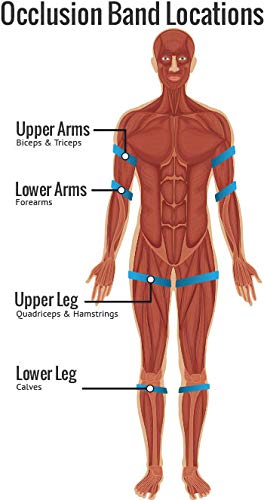
A premium set of BFR bands can help keep your gains if you are required to exercise at house with whatever weights you can discover (bfr training bands). My Suggestions Cuff Positioning. The arteries and nerves are close to the skin here are high pressures can trigger real damage. On the arms they ought to go right listed below your shoulders. blood flow restriction cuffs.
How Tight Should BFR Bands Be? The normal suggestion for BFR band compression is to Above that level, you risk cutting of the arterial blood supply into the muscles. However below a 4 does not actually produce sufficient compression to be effective. Some flexible BFR bands have numbers on the sides.
How Long To Gain Muscle Mass With Bfr Training
They aren't connected to the pressure scale. You desire to stay between 4 and 7 on a scale where a 10 is as tight as you can possibly tolerate. Is it much better to be a little too tight or a little too loose? Being a little too loose is absolutely much better (blood flow restriction training legs).
Take it simple, HE-MAN; you want to slow the venous blood return, not twist your leg off (blood flow restriction training for chest). Indications that the bands are too tight: Collapsed, flat veins in hands and feet, Pale, white fingers or toes, Pounding pulse at the bands, No pulse at the wrist or ankle, Pins and needles Indications of correctly tightened BFR bands: Somewhat redder, darker color to extremities, Increased exposure and distension of veins in hands and feet, Tight sensation in muscles while working, Pulses still detectable at wrist and ankle How Many Reps/Sets Should You Do? The lifting routine for Occlusion Training is rather various from what you are probably utilized to.
Usually, you do between 3-5 exercises during a session. And work on either the arms or legs during a session, but not both. Remember, these are high volume sets close together; 30 second rests between sets and 1-2 minute rests in between exercises - blood flow restriction bands. Which Exercises Should I Do? Remember you want to go light with the resistance on these workouts.
2-3 Times a week if you are simply attempting to remain in shape. Mix it in with your cardio. That can be on the exact same day, or alternating. And keep in mind to work on your core strength too. 3-4 times a week if you are recovering from an injury or surgical treatment.
You won't require as much healing time in this case. And your objective is just to maintain your muscle bulk and prevent atrophy. Competitive athletes will desire to incorporate it into their workout cycles. The United States ski team utilizes BFR bands while on the ski simulator. And you can utilize it while deloading to keep muscle while letting it heal.
When Do You Take Off During Workout Blood Flow Restriction Training Bodybuilding
You require to give your body the time to grow the muscles in reaction to your exercises. Muscles aren't everything! What about my chest and/or butt muscles? Will frequent BFR result in asymmetry? Will it develop your limbs more than the chest, back, and butt muscles? Actually BFR seems to help build up your chest and glutes although they are above the bands (blood flow restriction training physical therapy).
Occlusion training is not unsafe for healthy individuals when performed properly. If you are healthy sufficient to engage in high-intensity workout currently, BFR training ought to be great. If you are brand-new to it, you should seek a therapist or trainer who can show you how to do it safely.
An initial study in fact suggests the opposite. It might improve venous blood flow in time. Of course we can't truly make that evaluation from a single little research study. We ought to examine it further. Obviously, this presumes you are doing it correctly. Making the bands too tight might definitely harm tissue. blood flow restriction training research.
It is also important to understand that light venous compression is currently a medically accepted technique of enhancing venous blood flow and preventing clots. After hip or knee replacements, we utilize sequential compression gadgets (SCD's) to prevent embolism. And they squeeze with about the very same pressure as BFR bands.
And this list might alter over time. It may become shown that BFR could potentially help individuals with venous stasis illness, however we don't know the answer to that yet. So I constantly recommend contacting your physician prior to trying it. How did BFR Training Begin? Congratulations! If you've made it this far you are actually committed to discovering BFR training - what is blood flow restriction training.
How To Wrap For Bfr Training Of Chest
https://www.ncbi.nlm.nih.gov/pmc/articles/PMC5609669/
RS
SSL Active
What does blood flow restriction training do?
https://www.menshealth.com/fitness/a19534758/blood-flow-restriction-to-build-muscle/
SSL Active
What does BFR stand for in exercise?
https://www.ncbi.nlm.nih.gov/pmc/articles/PMC6530612/
SSL Active
Does BFR training hurt?
https://www.sportsinjurybulletin.com/blood-flow-restriction-training-feel-the-pressure/
SSL Active
How often should I do BFR training?
https://www.physio-pedia.com/Blood_Flow_Restriction_Training
SSL Active
Does BFR training increase size?
https://www.forbes.com/sites/leebelltech/2019/03/30/smart-cuffs-how-blood-flow-restriction-training-is-the-next-big-fitness-trend/
SSL Active
Does BFR training increase strength?
https://www.ncbi.nlm.nih.gov/pmc/articles/PMC6683630/
SSL Active
Are BFR bands dangerous?
BFR works through the partial occlusion of blood flow. According to multiple research studies, WIDER CUFFS DECREASE THE PRESSURE NEEDED TO RESTRICT BLOOD FLOW. This means that the small cuffs sold by many “BFR” manufacturers increase the risk of soft tissue damage.
https://thebarbellphysio.com/blood-flow-restriction-training-safe/
SSL Active
Who benefits from BFR training?
https://www.issaonline.com/blog/index.cfm/2020/blood-flow-restriction-training-what-trainers-need-to-know
SSL Active
What is the ideal BFR?
https://precisionhealthclinics.com.au/bfr-what-the-heck-is-it/
SSL Active
What are the benefits of BFR bands?
https://bstrong.training/blogs/articles/blood-flow-restriction-training-benefits
SSL Active
Do BFR bands really work?
https://www.onnit.com/academy/is-it-legit-occlusion-training-for-muscle-growth/
SSL Active
How does BFR build muscle?
Elastic BFR bands partially restrict the venous blood (oxygen deficient blood flowing from the limbs back to the heart) return. This makes the muscles work even harder to pump the blood back to the heart!Nov 13, 2020
https://www.athletico.com/2020/11/13/how-does-blood-flow-restriction-work/
SSL Active
How long can you keep BFR bands on?
https://www.bfrbands.com/faqs/
SSL Active
Can I do occlusion training everyday?
https://www.bfrbands.com/is-it-bad-to-do-the-same-exercise-every-day/
SSL Active
Does BFR work for chest?
https://pubmed.ncbi.nlm.nih.gov/20618358/
SSL Active
Where do you put your BFR band for your butt?
https://recoverfun.com/blogs/blood-flow-restriction-training/how-to-use-bfr-training-to-grow-your-arms-legs-and-booty
SSL Active
How do you program BFR training?
- The generally prescribed protocol is as follows: ...
- Set 1: 30 reps / Rest: 30-60 seconds.
- Set 2: 15 reps / Rest: 30-60 seconds.
- Set 3: 15 reps / Rest: 30-60 seconds.
- Set 4: 15 reps / Rest: 30-60 seconds. ...
- Barbell Bench Press 80-85% 1RM.
https://drjohnrusin.com/blood-flow-restriction-scientifically-advancing-muscular-strength-hypertrophy/
SSL Active
How tight should occlusion bands be?
https://www.bfrbands.com/tips-for-using-occlusion-training-wraps-effectively/
SSL Active
Does blood flow help muscle growth?
https://www.phd.com/perform-smart/the-importance-of-a-muscle-pump-for-increased-muscle-growth/
SSL Active
Does BFR increase HGH?
https://www.precisionpt.org/post/blood-flow-restriction-training-deserving-the-hype
SSL Active
How can I get huge muscles?
- Eat Breakfast to help build Muscle Mass. ...
- Eat every three hours. ...
- Eat Protein with Each Meal to Boost Your Muscle Mass. ...
- Eat fruit and vegetables with each meal. ...
- Eat carbs only after your workout. ...
- Eat healthy fats. ...
- Drink water to help you build Muscle Mass. ...
- Eat Whole Foods 90% of The Time.
https://www.everyoneactive.com/content-hub/gym/eight-tips-help-build-muscle-mass/
SSL Active
Can you use BFR bands while running?
https://pure-physio.com/endurance-bfr-training/
SSL Active
Can BFR training cause blood clots?
Research from surgical tourniquet tells us that complete vascular occlusion can cause the formation of a thrombus (blood clot). The incidence rate of suffering a venous thrombosis during BFR training is 0.06%, and this number is lower than the general population figure.
https://sujibfr.com/blogs/blog/is-blood-flow-restriction-training-safe
SSL Active
What are the best BFR bands?
- BFR Bands. Occlusion Training Bands. ...
- Superpump! Kaatsu-inspired Training Straps. ...
- Ronin Wraps. BFR Occlusion Bands (4 pack) ...
- Beast Pump. Occlusion Bands (4 pack) ...
- Lifting Lab. Ultimate Arm Builder.
https://bestreviews.com/best-occlusion-training-bands
SSL Active
Does BFR increase vascularity?
BFRT increases vascularity and allows you to build more strength from lighter loads. This allows you to do more repetitions. You may only need to use weights that are 20 percent of your normal weight.Sep 13, 2019
https://www.healthline.com/health/veiny-arms
SSL Active
BFR was created by a Japanese therapist, Yoshiaki Sato, around 1994. After being in a standard kneeling position for a very long time at a funeral, Sato recognized that his calves felt just as if he 'd done an energetic workout. From there he questioned if sitting on his calves had actually slowed blood return, trapping CO2, lactic acid, and other waste products.
Last Article Next
Other Resources:
Bfr Training Taylor - BFR Training
Will Bfr Training Work With Body Weight Exercises - BFR Training
Who Offers Blood Flow Restriction Therapy Philadelphia - BFR Training
Leave a Comment:
Blog Search
Popular Blog Categories
- blood flow restriction training
- bfr training
- blood flow restriction bands
- blood flow restriction therapy
- blood flow restriction training physical therapy
- blood flow restriction physical therapy
- blood flow restriction cuffs
- blood flow restriction training for chest
- what is blood flow restriction training
- what is bfr training